The Literacy Crisis, part 3 of 3
The Tech Effect on Literacy
Reading scores have been falling since 2012, and reading for pleasure has collapsed. It wasn’t one cause. Three things happened at the same time, and together they changed how children read and learn.

Three things happened at once
U.S. reading performance peaked
Teen smartphone ownership began to rapidly increase and between 2015 and 2018 the share of teens online “almost constantly” nearly doubled.
And learning loss due to Covid is not the sole reason: reading losses between 2013 and 2019 were similar to those seen between 2020 and 2024.
Federal COVID relief reached schools
Devices were a genuine equity measure in an emergency. 92% of districts spent relief money on educational technology, and 93% bought hardware.
What was necessary during a crisis became the default for how children read and learn.
The steep decline in School Librarians began
Since 2010, more than 20% of School Librarians have been eliminated nationally, and more than 30% in New Jersey. Library support staff fell nearly 45%.
The educators who support literacy across every subject, foster a love of reading and help students evaluate what they read were cut just as technology arrived.
More screens, fewer School Librarians, and reading in decline, all at the same time.
The Widening Gap: Reading Scores
Reading scores, reading for pleasure, school librarian staffing and teen smartphone ownership, 2010–2024
Points mark actual survey and data years. Each line uses its own scale so the direction of every trend is easy to compare; the labels show the real values.
Average reading scores for 13-year-olds have fallen 7 points since 2012, returning to about where they were in 1971, and they were still flat in 2025. Over the same years, teen smartphone ownership climbed to 95%, reading for fun fell to 14%, and the nation lost more than 20% of its school librarians.
Reading scores and reading for fun: NAEP Long-Term Trend, age 13, nationsreportcard.gov (scores: 2012, 2020 and 2023; the 2025 results showed no significant change from 2023). Librarians: NCES Common Core of Data, Digest of Education Statistics Table 213.10. Teen smartphone ownership: Pew Research Center surveys of U.S. teens; the 23% figure is ages 12–17 (2011) and the 95% figure is ages 13–17 (2022–2024).
“We cannot say for sure, but declining levels of reading for enjoyment and the shift towards digital reading — skimming social media feeds and rapidly processing information — may be compromising the ability of students to engage with complex texts and data.”
OECD, PISA 2025 Results
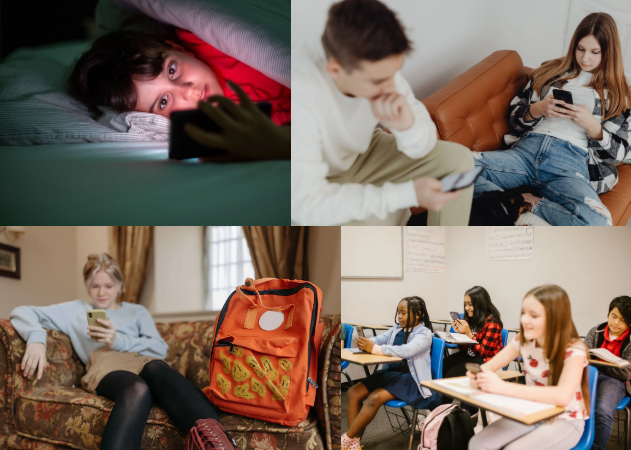
How technology disrupted reading, literacy and learning
- 01Increase in smartphones, social media & EdTech
- 02Less Reading for Pleasure & Reading in Print
- 03Less reading volume & lower quality reading
- 04Decline in fluency, vocabulary, comprehension & reading stamina
- 05Decline in Academic Achievement + Mental Well-Being
Click on each of the six boxes below to see the direct impact technology had on the conditions needed for reading, literacy and learning.
Time and focus
98% of 15-year-olds own a smartphone, and 59% say they’re distracted by other students’ devices. Quiet time for focused studying and reading for pleasure was replaced by social media and constant interruptions resulting in fragmented learning.
Fragmented attention and less time reading→weaker focus, fluency and reading stamina
Whole books and range
Feeds train students to skim, and their vocabulary is more limited than a book’s. Algorithms narrow what students see. As stamina and reading complexity fall, so does the range of vocabulary, formats, cultures and experiences students meet.
Skimming replaces sustained reading→narrower vocabulary and background knowledge
Schools reduced print budgets and moved reading and learning onto screens. Dozens of studies find students understand informational text better on paper, yet believe they understood more when reading on screens. Brain scans show why: paper readers had already pieced the story together, while tablet readers were slower and their brains had to work harder to catch up.
Less print in front of students→shallower processing, weaker attention and less retained
Social interaction
Excessive use is linked to isolation and feelings of exclusion, lost sleep, attention problems, cyberbullying and social comparison that erodes self-esteem. Above three hours a day, adolescents face double the risk of anxiety and depression symptoms. Shared reading, book clubs and discussions became parallel scrolling.
Reading stops being a shared activity→more isolation, less sleep, lower motivation to read and greater mental health strain
Truth
PISA 2025 finds over half of students may be vulnerable to misinformation, and that reading skills have fallen furthest in the areas tied to critical thinking: evaluating evidence and telling fact from opinion. Generative AI now does the work. In one EEG study, students writing with an AI assistant showed the weakest brain connectivity of any group, and 83% couldn’t quote a line of the essay they had just written.
Cognitive outsourcing and questionable sources→weaker recall, weaker reasoning and AI output accepted as fact
Guidance
The professional who connects literacy across every core subject, teaches media, information and AI literacy, and helps motivate students to read was cut just as technology took over. See what a School Librarian does.
The counterweight removed→every disruption above went unanswered
The scale is starting to tip back
After years of tipping toward technology, schools are now limiting phones, Chromebooks and AI. New Jersey’s bell-to-bell cell phone ban takes effect this school year, and bills to write AI instruction into the K–12 curriculum are before the Legislature.
In states that banned phones earlier, school library visits and book circulation jumped.
When you take the phone away, students reach for a book. But only if there’s a School Library open, with a School Librarian in it.
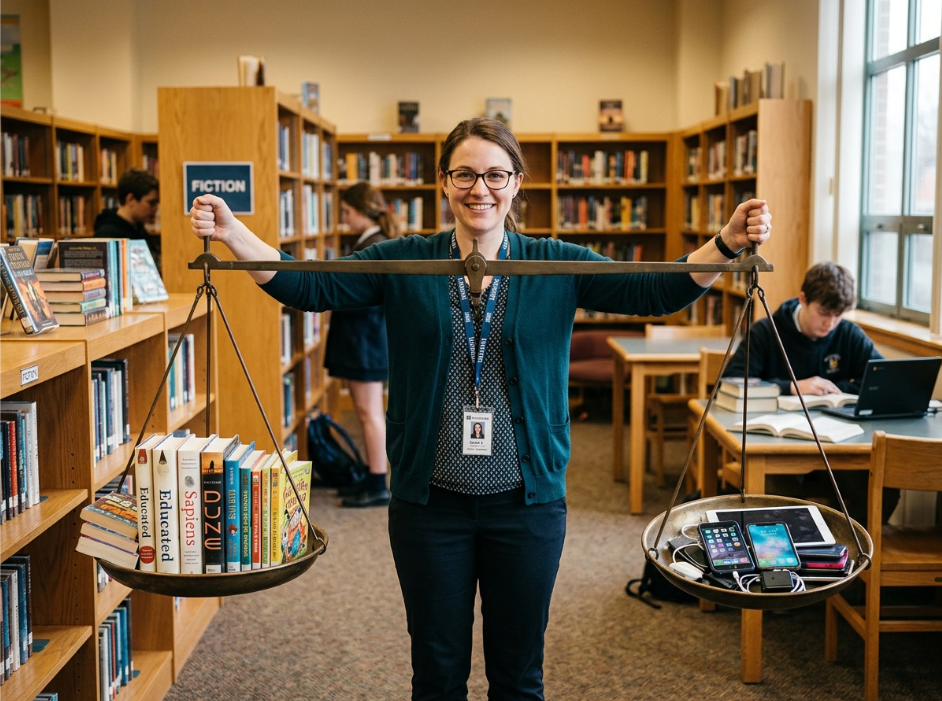
Every disruption can be counterbalanced
A high-quality School Library Program restores each of the six conditions technology took away. It starts with the person at the center of it.
What does a School Librarian do?Every figure on this page is sourced at schoolsneedlibrarians.com/sources.