




















































The Solution
Elements of a High-Quality School Library Program
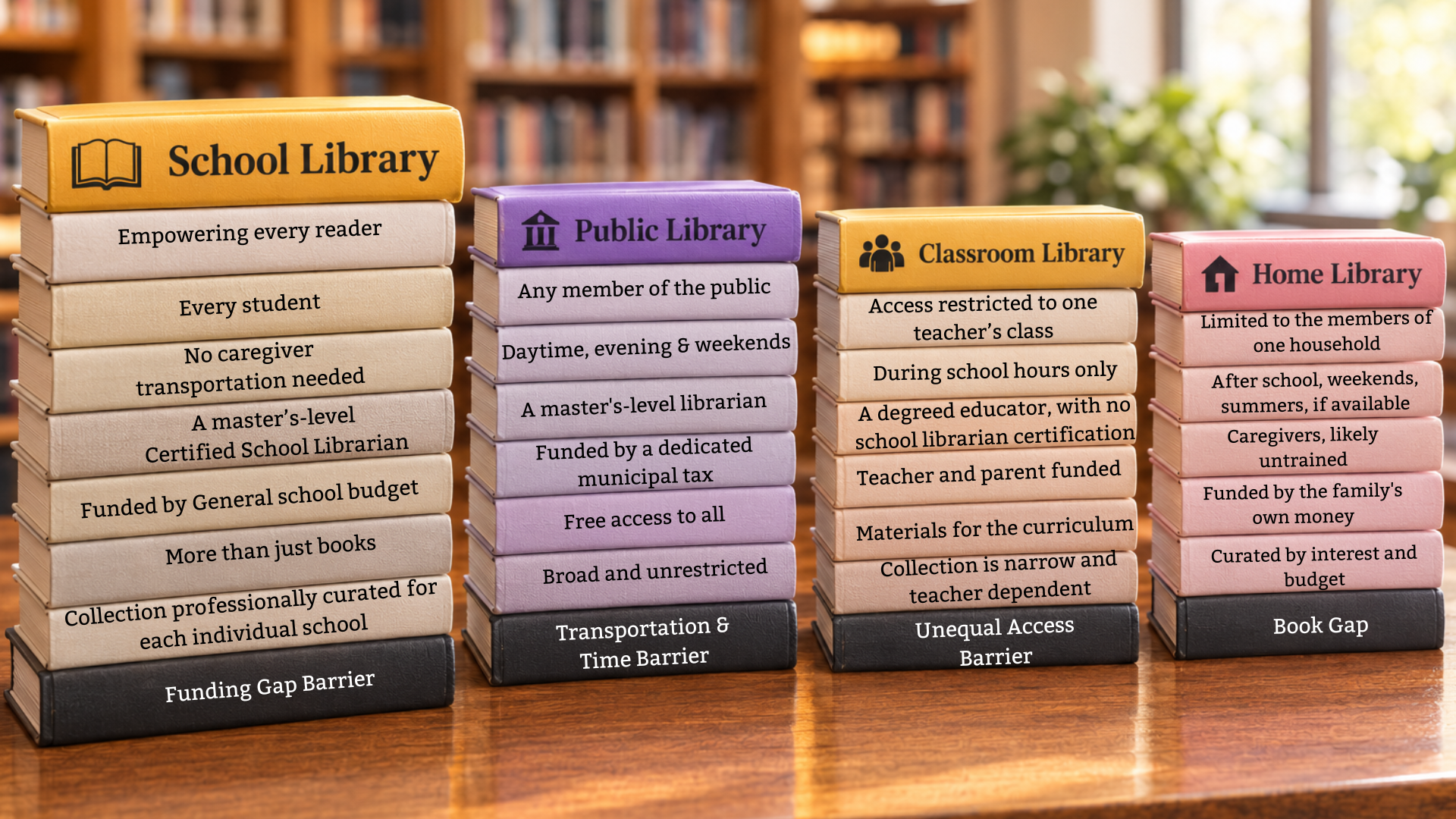
Shelves, books and space, but no one to teach with them.
An expert educator, but one who can be cut in a single budget vote.
A curriculum, a five-year plan, staffing ratios, a budget and an annual report to the board. The program is what makes a library accountable, and what lets it survive a budget cycle.
The ten elements
This is what a properly staffed and funded program contains. Use it as a checklist: tick what your own district already has.
Foundation
What keeps the program funded and answerable.
People
Who runs the program, and how they keep growing.
Teaching
What students actually learn, and who it reaches.
Place and resources
Where it happens, and what students can reach.
Not sure what your district has? Start with its staffing in the District Report Cards, then ask your Superintendent directly.
Why this has to be statewide
Individual districts can build programs, but only the State can make sure every student gets one.
New Jersey already says it is essential
Since 2008, the School Funding Reform Act has built School Librarians into the base per-pupil cost of a thorough and efficient education. The requirement exists. Enforcement does not.
See what the law saysWithout standards there is no accountability
New Jersey sets no standards for School Library Programs, so there is no way to judge the quality of a district’s program or what its students receive. The existing requirement carries no consequence, so districts eliminate the position and nothing follows.
Districts cannot solve it alone
The smallest districts will never sustain a full-time position from their own budget, and the largest are already stretched past a thousand students per librarian. Left to each district, library budgets follow the local tax base and administrative priorities rather than student needs.
See how far New Jersey is from this
Staffing, spending and the law, across all 535 districts.
Every figure on this page is sourced at schoolsneedlibrarians.com/sources.
The Solution
Elements of a High-Quality School Library Program
Shelves, books and space, but no one to teach with them.
An expert educator, but one who can be cut in a single budget vote.
A curriculum, a five-year plan, staffing ratios, a budget and an annual report to the board. The program is what makes a library accountable, and what lets it survive a budget cycle.
The ten elements
This is what a properly staffed and funded program contains, grouped by what each part does.
Tap any element to see the question it turns into at a board meeting.
Foundation
What keeps the program funded and answerable.
People
Who runs the program, and how they keep growing.
Teaching
What students actually learn, and who it reaches.
Place and resources
Where it happens, and what students can reach.
Why this has to be statewide
Individual districts can build programs, but only the State can make sure every student gets one.
New Jersey already says it is essential
Since 2008, the School Funding Reform Act has built School Librarians into the base per-pupil cost of a thorough and efficient education. The requirement exists. Enforcement does not.
See what the law saysWithout standards there is no accountability
New Jersey sets no standards for School Library Programs, so there is no way to judge the quality of a district’s program or what its students receive. The existing requirement carries no consequence, so districts eliminate the position and nothing follows.
Districts cannot solve it alone
The smallest districts will never sustain a full-time position from their own budget, and the largest are already stretched past a thousand students per librarian. Left to each district, library budgets follow the local tax base and administrative priorities rather than student needs.
See how far New Jersey is from this
Staffing, spending and the law, across all 535 districts.
Every figure on this page is sourced at schoolsneedlibrarians.com/sources.